


faith
What the Bible Says About Trusting God
Biblical trust isn't wishful thinking. It's leaning your full weight on God's character, even when you can't see the outcome. A plain look at what Scripture actually says about trusting God, from Proverbs 3:5-6 to Jeremiah 17.
Biblical trust isn't crossing your fingers and hoping things work out. The Hebrew word behind it, batach, means to lean your full weight on something because you're sure it will hold. That's a long way from a vague, hopeful feeling.
So when Scripture tells you to trust God, it isn't asking for optimism. It's asking you to put your whole self on His character, especially when you can't see how anything is going to turn out. This post is about what the Bible actually says trust is. For the practical side, the week-by-week of how to trust God when you can't see the next step is its own companion post.
What does the Bible actually mean by "trust"?
The verb most often translated "trust" in the Old Testament is batach, and it shows up well over a hundred times. The picture underneath it is physical: leaning on something, feeling safe, being confident because you're certain it will hold your weight, the way you sit in a chair without checking it first. That's the posture the Bible has in mind.
That matters because we tend to treat trust as a warm feeling that comes and goes. The Bible treats it as a decision: you either lean on God, or you lean on yourself. Trust isn't believing nothing can go wrong. It's being so sure of who's holding you that you can keep walking before the outcome is clear.
What does "trust in the LORD with all your heart" mean?
The most quoted trust passage in the Bible sets the whole pattern.
"Trust in the LORD with all your heart and lean not on your own understanding; in all your ways submit to him, and he will make your paths straight."
Proverbs 3:5-6 (NIV)
Two phrases carry the weight. "With all your heart" means the whole self, not a hedged bet where you trust God with the parts you can't control and keep the rest. And "lean not on your own understanding" is the same batach idea pointed the other way. You're always leaning on something. The question is whether it's God or your own read of how things should go.
Notice the order, too. He doesn't show you the whole route first so you can decide whether He's worth following. He asks for your trust now, and straightens the path as you walk it. We want the map before we commit. God offers His presence instead.
How do you trust God when you're afraid?
One of the most honest verses about trust came from a man captured by his enemies. The heading on Psalm 56 ties it to the time the Philistines seized David in Gath. He's not writing from a calm place. He's in real danger, and this is what he says:
"When I am afraid, I put my trust in you."
Psalm 56:3 (NIV)
Read that slowly. He doesn't say "if I am afraid," and he doesn't pretend the fear isn't there. He names it, then he does something with it. A verse later he doubles down: in God he trusts, so he will not be afraid, because what can mere mortals do to him?
That's the key distinction for anyone who assumes strong faith means you never feel scared. You can be afraid and trusting at the same time. The fear is what's happening to you. The trust is what you decide to do with it. If fear is the thing you keep wrestling, sit with what faith over fear actually means and the bigger picture of what the Bible says about fear. The short version: God talks to scared people constantly, and He never shames them for it.
Does trusting God really bring peace?
Isaiah connects trust to something a lot of us are desperate for.
"You will keep in perfect peace those whose minds are steadfast, because they trust in you."
Isaiah 26:3 (NIV)
"Perfect peace" translates a doubled Hebrew word, shalom shalom, the language's way of saying complete, settled, whole peace. And look at what it's tied to: a "steadfast mind," a mind fixed on God rather than spinning through every worst-case scenario. The peace isn't promised because your circumstances finally calm down. It's promised because of where your mind is leaning.
So the order is trust first, then the mind steadies, then peace follows. Most of us run it backwards, waiting to feel peaceful before we'll trust. But trust is the door peace walks through, not the reward you collect once everything is fine. It's the same confident expectation that runs through everything the Bible says about hope: settled, forward-looking, anchored in God instead of your situation.
Why does Jeremiah compare trust to a tree by water?
The most vivid picture of trust is a contrast between two kinds of people. Just before this passage, Jeremiah describes the one who trusts in mere human strength as a bush in a dry wasteland. Then he flips it:
"But blessed is the one who trusts in the LORD, whose confidence is in him. They will be like a tree planted by the water that sends out its roots by the stream. It does not fear when heat comes; its leaves are always green. It has no worries in a year of drought and never fails to bear fruit."
Jeremiah 17:7-8 (NIV)
Here's the genius of the image. Both the bush and the tree face the same heat and the same drought. The weather isn't the difference. The roots are. The tree survives because its roots reach water the surface can't see. Trust decides what your life is tapped into when the dry seasons come, and they will come. Trusting God doesn't mean you skip the drought; it means your roots are in something the drought can't touch. Jeremiah, the same prophet who wrote that God has plans to give you a hope and a future, is describing a person who stays green while everyone around them browns out.
How do you trust God when you can't see the outcome?
This is the thread running through every verse above. David trusted before he knew he'd survive Gath, and the tree's roots reach water it can't see. The Bible never promises you a clear view of the outcome. It promises you a trustworthy God, so you don't trust the result, you trust His character. You look at who God is, what He's already promised, and the times He's come through for you before, and you rest your weight there even with the ending hidden. That's the whole logic of faith: "confidence in what we hope for and assurance about what we do not see" (Hebrews 11:1, NIV). You were never meant to see the end from the beginning, only to know the One who already does.
And the limit on what's possible was never your ability to see the way. In Mark's Gospel, a desperate father brings his suffering son to Jesus, and Jesus tells him, "Everything is possible for one who believes." The dad's reply is one of the most honest lines in the Bible: "I do believe; help me overcome my unbelief." Trust and doubt in the same breath, and Jesus meets it anyway. It's worth reading what Mark 9:23 actually means before you treat it like a blank check, and the practical side lives in how to trust God when you can't see the next step.
A reminder you can wear when the outcome is hidden
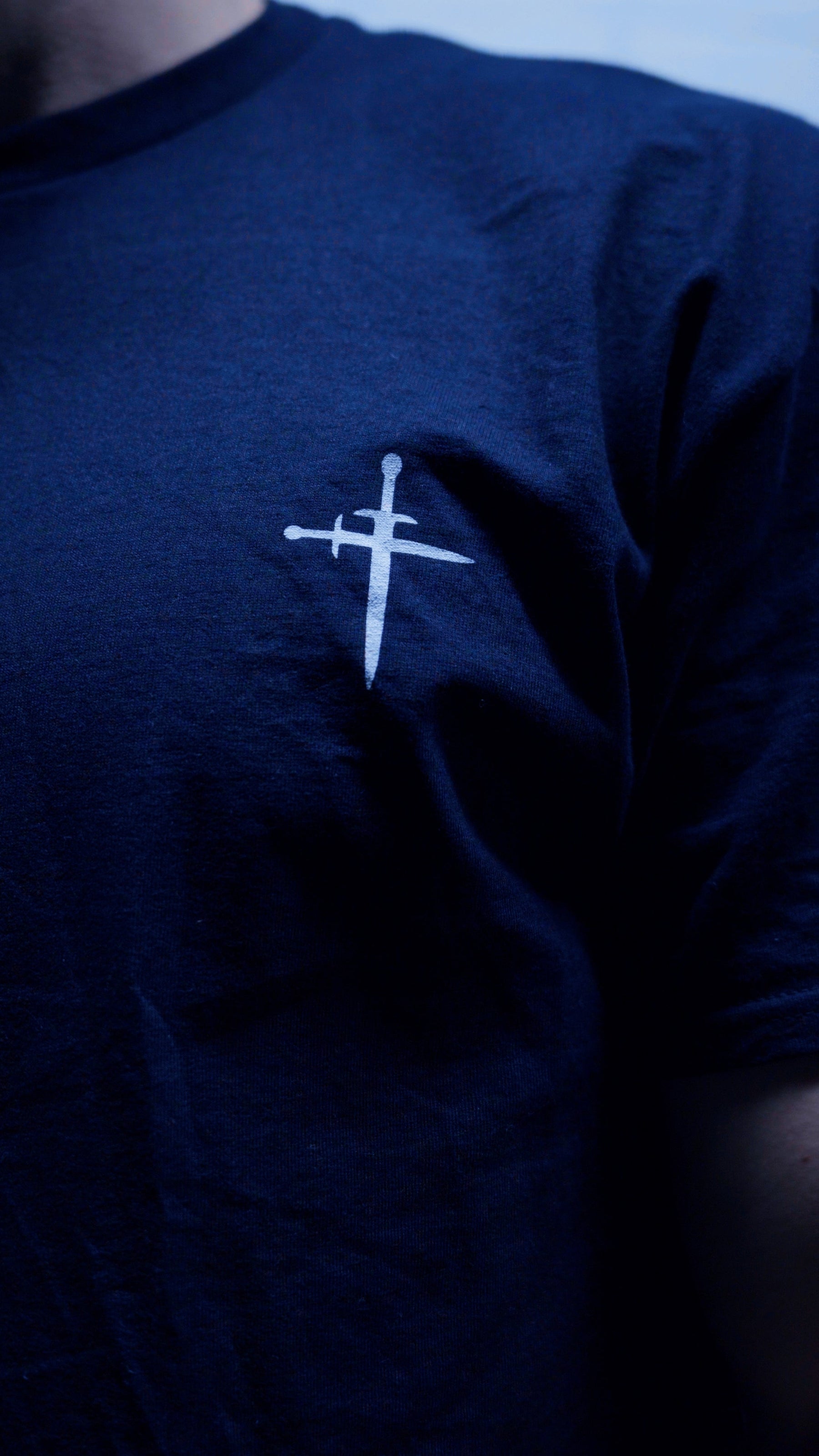
Some days trust is loud. Some days it's barely a whisper. On the whisper days it helps to have the words where you can see them, because trust is something you keep preaching back to yourself. That's why the FALL tee carries Mark 9:23 across the front:
"Everything is possible for one who believes."
Mark 9:23
It's a small way to remind yourself, before you've even had coffee, that the limit was never God's power and never your ability to see the way. And when someone asks what it means, you've got an honest conversation to have. Wear it to share it. You'll find it with the rest of our Bible verse t-shirts, each built around a line worth carrying into a hard season, and a share of the profits goes to churches doing real work.
Frequently asked questions
What does the Bible say about trusting God?
The Bible treats trust as leaning your whole weight on God's character, not wishful thinking. Proverbs 3:5-6 says to trust the Lord with all your heart and lean not on your own understanding. Psalm 56:3 makes it a choice you make while afraid, Isaiah 26:3 ties it to perfect peace, and Jeremiah 17:7-8 pictures the one who trusts God as a tree by water. The thread is the same: trust rests on who God is, not on whether you can see the outcome.
What does the Hebrew word for trust mean?
Batach is the Hebrew verb most often translated "trust" in the Old Testament. It carries the sense of leaning on something, feeling safe, and being confident because you're sure it will hold your weight. It isn't a vague feeling. It's the decision to rely fully on God the way you'd rely on solid ground, which is why Scripture can say to trust the Lord with all your heart.
What is the best Bible verse about trusting God?
Proverbs 3:5-6 is the one most people reach for: trust in the Lord with all your heart and lean not on your own understanding. Psalm 56:3 is the anchor for fearful moments, "when I am afraid, I put my trust in you." Isaiah 26:3 promises perfect peace to the steadfast mind, and Jeremiah 17:7-8 paints the most vivid picture. There's no single ranked verse, but those four cover trust from nearly every angle.
How do you trust God when you can't see the outcome?
You trust His character instead of the result. Trust was never meant to depend on seeing the end from the beginning. Look at who God is, what He has promised, and the times He has already come through for you, then lean your weight there even with the ending hidden. Hebrews 11:1 calls this assurance about what we do not see. For the step-by-step version, see the companion post on how to trust God.
What's the difference between faith and trust in the Bible?
They overlap so much that Scripture often uses them together. Faith is believing God is who He says He is. Trust is what you do with that belief: you rely on Him, act on it, and rest your weight on His character. Mark 9:23 ties the two together, "everything is possible for one who believes." Trust is faith with your full weight on it.
Wear it to share it
Carry the reminder with you.
"FALL" TEEfor the saints
Join The List
New drops, new words, and first access. Plus 10% off your first order.