


Bible verse meaning
What Psalm 23 Means
Psalm 23 isn't a funeral poem. Here's what it means, verse by verse, from the Lord as shepherd to 'I will fear no evil,' and why one line is worth carrying with you every day.
Psalm 23 is one of the best-known passages in the whole Bible, and also one of the most misread. We pull it out at funerals and stitch it onto sympathy cards, but David didn't write it as a goodbye. He wrote it as a survival song: six short verses about who walks with you when life turns into a dark valley.
Read it slowly, line by line, and it answers the question sitting underneath most of our fear: am I actually safe? Here's what Psalm 23 means, verse by verse, from the Lord as shepherd to "goodness and mercy," and why one line of it is worth carrying with you every day.
What does Psalm 23 mean?
In one sentence: Psalm 23 means that if God is your shepherd, you are completely cared for, even in danger, because He provides for you, leads you, walks with you through the worst valleys, and brings you home. The psalm moves from rest, to risk, to a full table, to a forever, and the one thing that never changes is who's with you.
Here's the whole psalm, taken in order, because the order is the point: it walks you from green grass into a death-shadowed valley and back out to an overflowing cup, without ever pretending the valley isn't real.
Who wrote Psalm 23, and why does it matter he was a shepherd?
David wrote Psalm 23, and he wasn't reaching for a pretty metaphor. Before he was king, he was a shepherd boy in the fields outside Bethlehem, the youngest son nobody thought to call in from the flock (1 Samuel 16:11). He had fought off a lion and a bear with his hands to protect sheep that couldn't protect themselves (1 Samuel 17:34-36).
So when David calls God his shepherd, he knows exactly what he's saying. A shepherd feeds, leads, counts, defends, and goes looking for the one that wanders. Sheep are not self-sufficient animals. They need someone awake while they sleep. David is admitting he's the sheep, not the hero, and that admission is where the whole psalm gets its peace.
What does Psalm 23 mean, verse by verse?
"The Lord is my shepherd, I lack nothing" (verse 1)
The Lord is my shepherd, I lack nothing. (Psalm 23:1, NIV)
The first line is the thesis, and everything after it is just proof. Notice how personal it is: not "the Lord is a shepherd," but my shepherd. And the claim is big. "I lack nothing" doesn't mean you get everything you want. It means that with God leading you, you already have everything you actually need. The King James reads "I shall not want," which is the same idea: a contentment that doesn't depend on your circumstances behaving.
Green pastures and quiet waters (verses 2-3)
He makes me lie down in green pastures, he leads me beside quiet waters, he refreshes my soul. He guides me along the right paths for his name's sake. (Psalm 23:2-3, NIV)
Sheep won't lie down when they're anxious, hungry, or sensing a threat nearby. So if the shepherd has them resting in green grass beside calm water, it means he's already handled the things they'd be scared of. The rest is evidence of the shepherd's work, not the sheep's effort. That's the same invitation you'll find in Psalm 46:10's "be still and know that I am God": stillness isn't laziness, it's trust.
"He guides me along the right paths for his name's sake" adds something easy to miss. God doesn't just lead you somewhere good; He leads you rightly because His own reputation is tied to how He treats His own. He's a shepherd who can't afford to be careless with you.
The valley of the shadow of death (verse 4)
Even though I walk through the darkest valley, I will fear no evil, for you are with me; your rod and your staff, they comfort me. (Psalm 23:4, NIV)
Here's the turn most people walk right past. Up to now David has been talking about God: "he makes," "he leads," "he guides." The second the valley shows up, David stops talking about God and starts talking to Him: "for you are with me." Fear changes the grammar. When it gets dark, you stop describing God from a distance and start addressing Him directly.
The famous King James phrase is "the valley of the shadow of death." The NIV calls it "the darkest valley." Either way the Hebrew points to deep gloom, the kind of place where you can't see your next step. David doesn't pretend the valley isn't there. He says he'll walk through it (not around it, not over it) and still not be afraid, for one reason only. The rod and the staff are the shepherd's tools, one to fight off predators, one to pull a sheep back from the edge. Comfort here isn't a soft feeling. It's a weapon in the shepherd's hand.
A table in the presence of my enemies (verse 5)
You prepare a table before me in the presence of my enemies. You anoint my head with oil; my cup overflows. (Psalm 23:5, NIV)
The picture shifts from shepherd to host. God doesn't wait until the enemies are gone to bless you; He sets the table right there in front of them. You can be at peace and provided for while the threat is still in the room. Anointing the head with oil was how you honored an invited guest, and "my cup overflows" is the image of a host who keeps pouring past the point of enough. This is abundance in the middle of opposition, not after it.
Goodness, mercy, and the house of the Lord (verse 6)
Surely your goodness and love will follow me all the days of my life, and I will dwell in the house of the Lord forever. (Psalm 23:6, NIV)
The King James version everybody knows says "goodness and mercy shall follow me." The NIV says "goodness and love." Both translate a rich Hebrew word for God's loyal, covenant kindness. And "follow" is gentle in English but stronger underneath: it can mean pursue, even chase. Picture goodness and mercy not trailing politely behind you but tracking you down all the days of your life. The psalm that started in green pastures ends with a home: "I will dwell in the house of the Lord forever." The Shepherd isn't only getting you through this valley. He's getting you all the way home.
Why does Psalm 23 say "I will fear no evil"?
Because of the second half of the sentence. David never says there's no evil in the valley, and he never says he beat fear by sheer willpower. He says "I will fear no evil, for you are with me." The reason is the presence, not the absence of danger. Take away "for you are with me" and the line is just positive thinking. Keep it, and it's faith.
This is the heart of what faith over fear actually means: not denying the dark valley, but refusing to walk it alone. If you want the bigger picture of how Scripture treats being afraid, what the Bible says about fear traces it from Genesis to Revelation, and the short version is that "do not be afraid" is one of God's most repeated commands, almost always followed by "for I am with you." And when your mind won't settle at 2am, a handful of Bible verses for anxiety can be the thing you hold onto until morning.
How do you actually live Psalm 23 when life is hard?
Psalm 23 isn't meant to be admired from a distance. It's meant to be prayed when you're in the valley, not after you've climbed out. A few honest ways to live it:
- Name the valley out loud. David didn't spiritualize his fear away. He named the dark valley, and then he named who was in it with him. Say both.
- Let rest be an act of trust. Lying down in green pastures is something the sheep allows the shepherd to provide. Sleep, sabbath, and stillness are ways of saying you believe Someone else is keeping watch tonight.
- Preach the line back to yourself. When fear spikes, make the move David made: stop describing God and start talking to Him. "You are with me" is a whole prayer in four words.
- Trust the path even when you can't see it. "He guides me along the right paths" is easy to believe in the green pasture and hard to believe in the dark. Learning how to trust God when you can't see the next step is most of the Christian life.
The same Shepherd who walks you through the valley here is the God who promises to be your refuge in Psalm 91. Different psalm, same protection, same presence.
A reminder you can wear
There's a reason verse 4 is the line that ends up on walls, in tattoos, and yes, on shirts. "I will fear no evil, for you are with me" is the whole psalm compressed into eight words you can carry into a hard day.
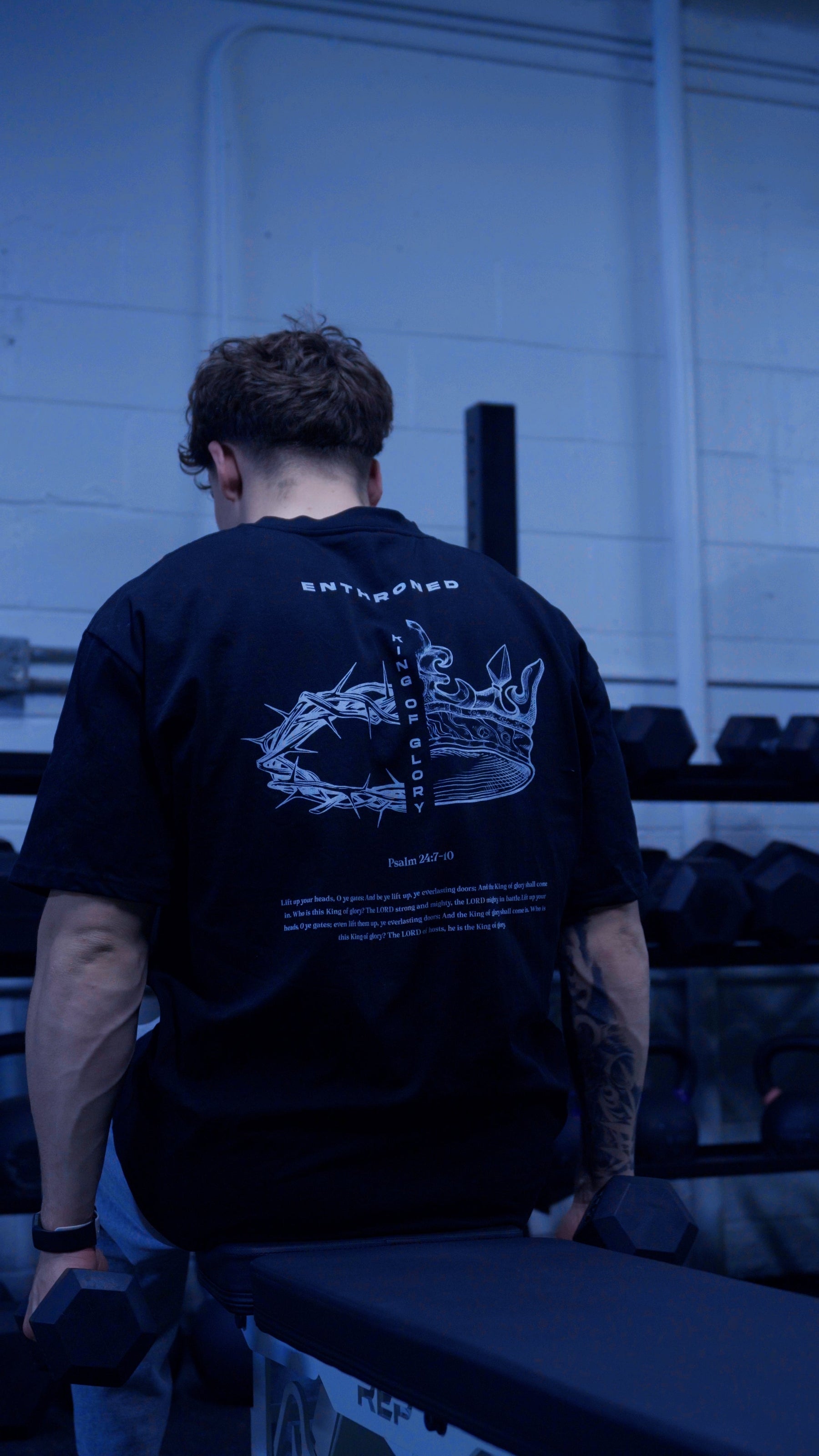
That exact line is what we printed on our FEARLESS tee: "I will fear no evil, for you are with me." (Psalm 23:4). It isn't a slogan. It's a sermon you can wear, and when someone asks about it, you get to tell them who's actually in the valley with you. Wear it to share it. If you want to compare a few looks first, we rounded up the best Psalm 23 shirts, and you can see the rest of our scripture-led designs in the Bible verse t-shirts collection.
Frequently asked questions
What is the main message of Psalm 23?
Psalm 23's main message is that God is a personal shepherd who fully provides for, leads, protects, and stays with His people, even in danger and death. David moves through five images (a shepherd, green pastures, a dark valley, a host's table, and a final home) to make one point: if the Lord is your shepherd, you lack nothing you truly need, and you're never alone, all the way home to "the house of the Lord forever."
What does "I will fear no evil" mean in Psalm 23?
It means David refuses to be controlled by fear, not because the valley is safe but because God is present. The full line is "I will fear no evil, for you are with me." The reason sits in the second half: "for you are with me." David never claims there's no danger or that he feels no fear. He says God's nearness makes the danger bearable, with the shepherd's rod and staff right there in the dark.
Who wrote Psalm 23?
King David wrote Psalm 23. Before he was king of Israel he worked as a shepherd, defending his flock from lions and bears, so the picture of God as a shepherd came from his own experience and not just poetry. The psalm is traditionally attributed to him and titled "A psalm of David."
What does "the valley of the shadow of death" mean?
It's the well-known King James wording of Psalm 23:4; the NIV translates the same phrase as "the darkest valley." The Hebrew points to deep shadow or gloom, the kind of darkness where you can't see your next step. It's a picture of life's worst seasons, including grief and dying. David's point is that you walk through it, you don't stay there, and you don't walk it alone.
Why is Psalm 23 read at funerals?
Psalm 23 is read at funerals because verse 4 speaks directly to death ("even though I walk through the darkest valley") and the psalm ends with the hope of dwelling "in the house of the Lord forever." It offers comfort and presence in grief. But David wrote it for living, not only for dying, as a daily song of trust in God's provision and protection.
Wear it to share it
Carry the reminder with you.
"FEARLESS" TEEfor the saints
Join The List
New drops, new words, and first access. Plus 10% off your first order.