


Style
What Is a Heavyweight T-Shirt? GSM, Fit, and Print Feel Explained
Heavyweight t-shirts explained — what GSM means, the full tier table, and the real specs behind HEVN's ~220 GSM standard and ~280 GSM oversized tees. 20% to churches.
Most guys have owned a t-shirt that felt like nothing the day they bought it. Thin, see-through in the wrong light, shapeless after a few washes. Then at some point you pull on a heavier tee and something clicks. The fabric has presence. It hangs differently, holds its shape, and does not feel disposable.

That difference almost always comes down to fabric weight. Once you understand what heavyweight actually means, you can stop guessing and start buying tees that feel worth wearing.
What GSM means and why it matters
GSM stands for grams per square meter. It measures how much a square meter of fabric weighs, which tells you how dense and substantial the material is. A higher GSM means more yarn packed into every inch, and you feel that the moment you pick the shirt up.
This is not a marketing term. GSM is how textile mills, garment factories, and print shops talk about fabric weight. So when a brand says "premium heavyweight" and never mentions a number, that is worth a pause.
What GSM range counts as heavyweight?
T-shirt fabric weight generally falls into a few tiers:
Lightweight: 120-160 GSM. Thin, breathable, often a little see-through. Think cheap promo shirts.
Midweight: 160-200 GSM. Where most standard retail tees live. Comfortable, decent structure.
Heavyweight: 200 GSM and up. Thicker, more structured, holds its shape on and off the body.
GSM comparison table
| Tier | GSM | oz/yd² | Feel | Use case | Example |
|---|---|---|---|---|---|
| Lightweight | 120-160 | 3.5-4.7 oz | Thin, often a little see-through | Promo tees, undershirts, summer base layers | Generic fast-fashion blanks |
| Midweight | 160-200 | 4.7-5.9 oz | Soft, slight structure | Standard retail tees | Most mall-brand tees; HEVN's 6.1 oz standard tee |
| Heavyweight | 200-250 | 5.9-7.4 oz | Dense, holds its shape, opaque under light | Statement graphic tees you actually rotate | Quality heavyweight streetwear blanks |
| Premium heavyweight | 250-300 | 7.4-8.9 oz | Boxy, structured, stiff out of the bag | Oversized streetwear cuts | HEVN Oversized YESHUA, 7 oz / 237 g/m² |
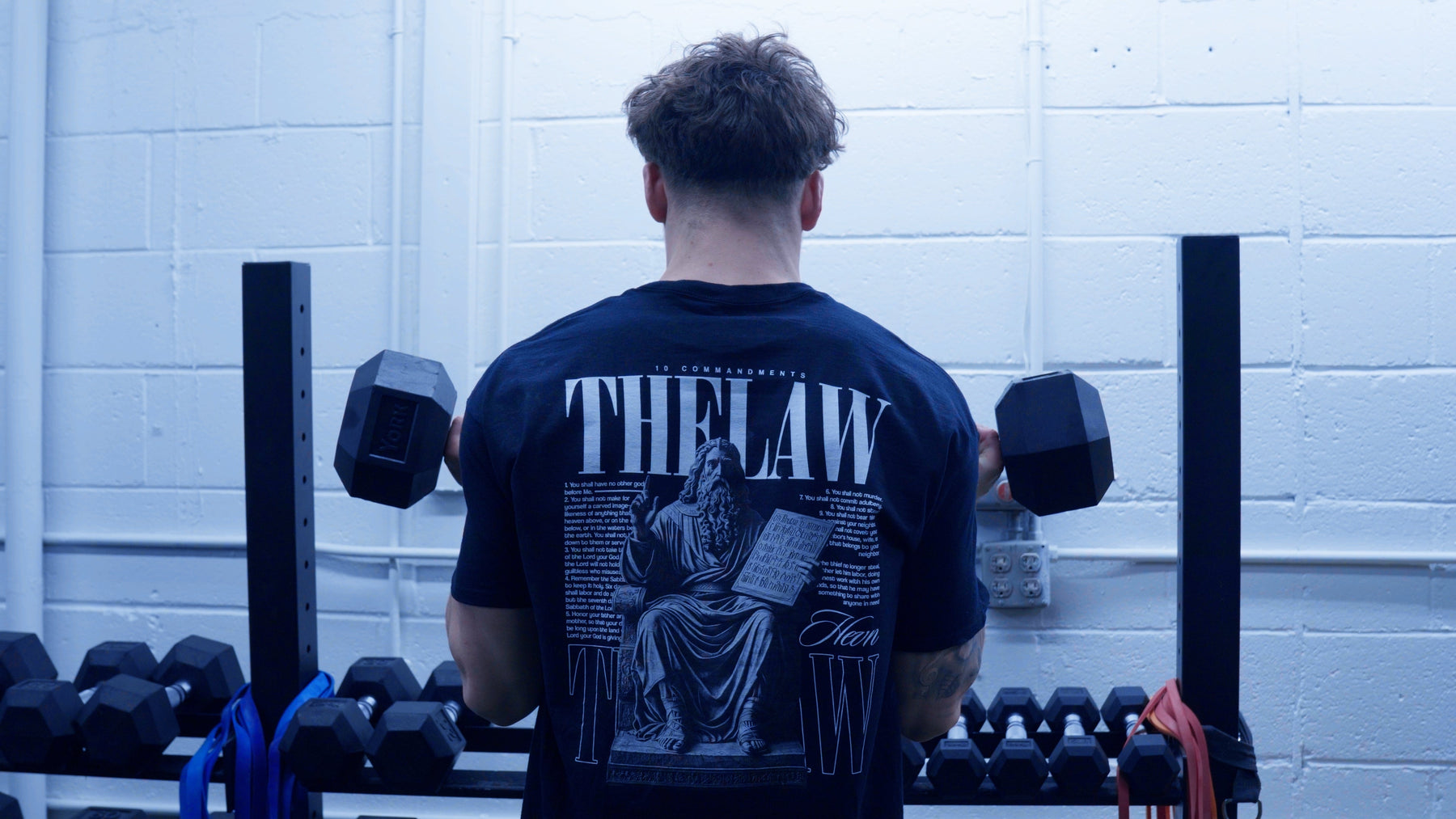
HEVN's oversized line is the heavyweight one: 100% cotton at 7 oz, or 237 g/m², which gives it the structured streetwear silhouette most saints reach for first. The standard tees are a midweight 6.1 oz combed cotton, built as an easygoing everyday option rather than a boxy statement piece.
Some brands push past 280 or 300 GSM for an intentionally stiff, boxy feel. That works for certain streetwear cuts, but heavier is not automatically better. A 220 GSM shirt in quality ring-spun cotton can outperform a 300 GSM shirt made with rough open-end yarn. Weight is one factor. Cotton quality and knit construction carry just as much of the final feel.
How fabric weight changes the way a shirt fits
A lightweight tee tends to cling. It follows the shape of whatever is underneath, which can work on a lean build but often looks limp and unstructured. It also wrinkles easily and loses shape in the wash.
Heavyweight fabric holds a silhouette on its own. The sleeves sit cleaner, the body drapes without clinging, and the shoulders keep their line through the day. That is exactly why heavyweight cotton became the go-to for oversized fits. The fabric has enough body to make an oversized cut look deliberate instead of sloppy. We get into that more in our guide to oversized Christian shirts.
Even on a standard fit, heavier fabric gives a shirt more presence. It does not ride up as easily, it stays put if you tuck it, and it generally photographs better because fewer wrinkles catch the light.
How fabric weight affects print quality
This is where heavyweight cotton quietly wins for Christian graphic tees. The weight and density of the fabric under a print directly affect how the design looks, feels, and lasts.
On thin fabric, screen prints and DTG prints can feel stiff and plasticky, because the ink sits on the surface with no structure underneath. The print ends up dominating the feel of the whole shirt. On heavier fabric, the ink settles in better. The print still has texture, but it does not feel like a decal stuck on tissue paper. Thicker fabric also resists the warping and stretching that makes prints crack over time, so the design holds together longer.
Shrinkage and break-in: what to expect
Heavier fabric does not mean zero shrinkage. Cotton shrinks. The question is how much, and how predictably.
Most heavyweight 100% cotton tees shrink slightly on the first wash, usually around 3-5% in length if you wash warm and tumble dry. After that first shrink they tend to settle. The denser weave holds its dimensions better than lightweight fabric, which can keep distorting over multiple washes. To keep that to a minimum, wash cold and air dry. Our full routine is in how to wash graphic tees.
The break-in is real too. A brand new heavyweight tee can feel stiff out of the bag. After two or three washes the fibers loosen and the fabric softens noticeably without losing its structure. That is one of the best things about a well-made heavyweight shirt: it improves with wear instead of falling apart.
How to judge fabric weight before you buy
You cannot always hold a shirt before buying, especially online. Here is what to look for:
Listed GSM. If a brand publishes the fabric weight, that is a good sign. It means they are confident in the spec and expect buyers to check.
Fabric description. Terms like "ring-spun" and "combed cotton" point to better yarn. Open-end or carded cotton at the same GSM feels rougher.
Weight in ounces. Some brands list ounces per square yard instead of GSM. Roughly, 6 oz and up is heavyweight territory, and 1 oz per square yard is about 34 GSM.
Photo transparency. On lighter colors, look closely at the product photos. If you can see the model's skin through the fabric, it is not heavyweight no matter what the listing says.
Price context. Heavyweight cotton costs more to make. A $12 shirt sold as "premium heavyweight" is usually a midweight tee with optimistic copy.
Trust brands that give you specs, not just adjectives. If you want help applying all of this, here is how to choose a Christian t-shirt.
Why heavyweight matters for tees you actually care about
A basic undershirt or a gym beater does not need to be heavyweight. But a shirt you are wearing as the outfit, one with a design that means something to you and one you want to reach for again and again, should feel like it was built to last.
Heavyweight fabric holds up in the wash, keeps its shape on the hanger, looks clean under any lighting, and gives a printed design the foundation it needs to age well. It is the difference between a shirt that slowly falls apart and one that breaks in and gets better.
If you want concrete picks: HEVN's standard CROSS tee and ARMOR tee are the easygoing midweight everyday options, and the oversized line (like the Oversized KOG at 7 oz / 237 g/m²) is the heavyweight, structured streetwear silhouette. The details on each product page will always tell you more than the marketing.
Build a rotation that lasts
Heavyweight cotton is the spine of the oversized line, and the saints who care how a tee ages (print integrity, silhouette, opacity under light) pick it over thinner fabric every time. A share of HEVN's profits goes to churches doing real work, so part of the spec is who the shirt serves after the sale.
If you want the heavyweight feel, browse HEVN's oversized tees at 7 oz / 237 g/m² and pick the design that means the most to you. Wear it to share it: a tee built to last is a tee that keeps getting seen.
Related reading
Frequently asked questions
What GSM is good for a t-shirt?
For everyday wear, 180-200 GSM is solid. For a shirt you want to feel substantial and survive heavy rotation, look for 200 GSM and up. Above 250 GSM starts to feel intentionally stiff, which suits some oversized cuts but is not better for everyone.
What is the difference between heavyweight and midweight t-shirts?
Midweight tees (160-200 GSM) are the standard retail range: comfortable and functional. Heavyweight tees (200 GSM and up) are thicker, more opaque, hold their shape better, and give prints a better surface to sit on. The tradeoff is a slightly stiffer feel when new and a little less breathability in real heat.
Do heavyweight t-shirts shrink more than regular tees?
Not necessarily more, but usually more predictably. Heavyweight cotton tees typically shrink 3-5% on the first warm wash, then settle. Lighter tees can keep distorting over time because the thinner weave is less stable. Cold water and air drying keep shrinkage minimal.
What weight are HEVN tees?
HEVN's oversized tees are the heavyweight line at 7 oz, or 237 g/m², for a structured streetwear silhouette. The standard tees are a midweight 6.1 oz combed cotton built as an easygoing everyday option.
Wear it to share it
See the ones worth wearing.
CHRISTIAN T-SHIRTSfor the saints
Join The List
New drops, new words, and first access. Plus 10% off your first order.